
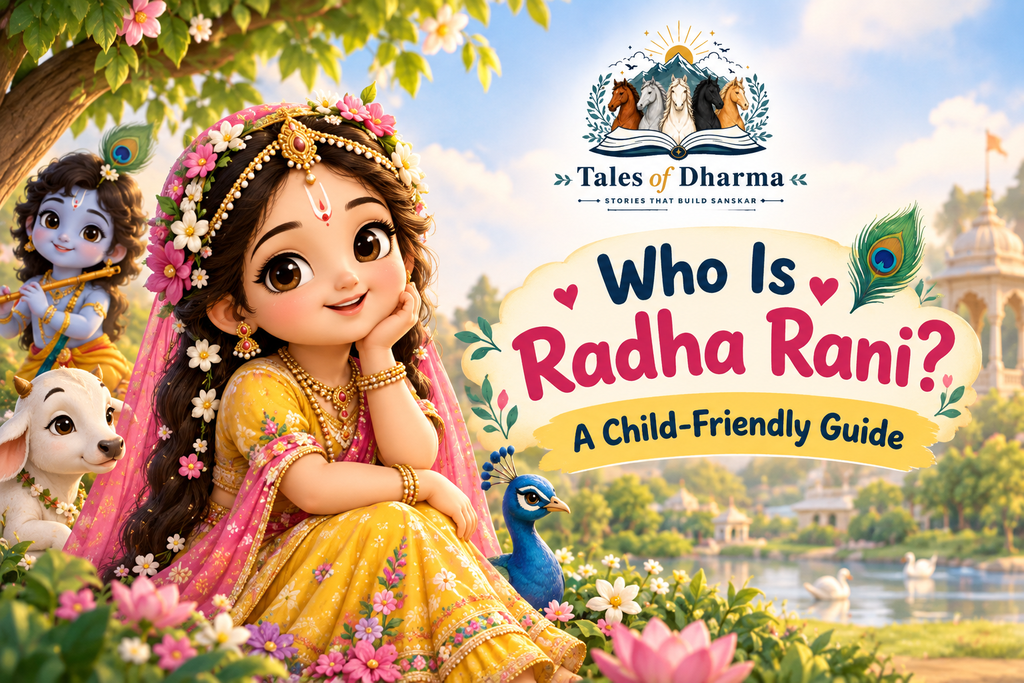
“Radhe Radhe!”
If you have ever visited Vrindavan or Barsana, listened to a Krishna bhajan, or heard your grandparents talk about Krishna, you may have heard these words.
But who is Radha Rani?
Why do people lovingly say “Radhe Radhe”?
Why is Radha always spoken about alongside Shri Krishna?
And what can a child today learn from Her story?
Let’s discover the beautiful story of Radha Rani—not as a difficult lesson from a book, but as a story of love, devotion, kindness, and a heart full of Krishna.
Who Is Radha Rani?
Radha Rani, also known as Shri Radha or Radhika, is one of the most beloved figures in traditions devoted to Lord Krishna.
She is deeply associated with Braj, especially Barsana and Vrindavan, where countless stories, songs, poems, paintings, and festivals celebrate Radha and Krishna.
For devotees, Radha represents the highest form of loving devotion, or bhakti.
That may sound like a big word to a child.
So how can we explain it?
You could simply say:
“Radha loved Krishna with a pure heart and never stopped remembering Him.”
Her story teaches us about a kind of love that is not about asking, “What will I get?”
It is about caring, remembering, giving, and staying connected with the Divine.
Where Did Radha Rani Live?
Radha Rani is traditionally associated with the sacred land of Braj, the region connected with the childhood stories of Krishna.
Among the places especially connected with Radha are Barsana and Vrindavan.
According to popular Braj tradition, Barsana is Radha Rani’s birthplace.
Even today, these places are filled with Radha-Krishna temples, devotional music, celebrations, and stories passed from grandparents to children.
For a child, you can describe Braj like this:
“Braj is the land where many beautiful stories of Krishna and Radha are remembered and celebrated.”
Who Is Radha to Krishna?
This is probably the question your child will ask first.
“Is Radha Krishna’s friend?”
“Is She Krishna’s sister?”
“Why are Radha and Krishna always together?”
Radha and Krishna are traditionally described as having a deeply special relationship.
Their stories are filled with friendship, playful moments, music, and devotion.
But their relationship has a deeper spiritual meaning in many Hindu traditions.
Radha’s love for Krishna is understood as an expression of pure bhakti—loving devotion toward God.
So rather than explaining their relationship only as an ordinary human love story, parents can introduce children to the idea of devotion.
You can tell your child:
“Radha’s love for Krishna reminds devotees of a heart that loves God completely and selflessly.”
Why Is Radha Called “Rani”?
Children often hear “Radha Rani” and wonder:
“Was Radha a queen?”
“Rani” means queen.
Devotees lovingly call Her Radha Rani as an expression of respect, affection, and reverence.
It is a beautiful devotional name.
So when your child hears someone say:
“Radhe Radhe!”
they can understand that it is a loving remembrance of Radha Rani.
Why Do People Say “Radhe Radhe”?
Walk through the streets of Braj and you may hear something beautiful.
One person says:
“Radhe Radhe!”
Another replies:
“Radhe Radhe!”
For many devotees, “Radhe Radhe” is much more than a greeting.
It is a way of lovingly remembering Radha Rani.
It can remind a person of devotion, kindness, and the Divine.
You can explain it to a child in one sentence:
“When people say Radhe Radhe, they are lovingly remembering Radha Rani.”
And perhaps that’s why the words feel so warm.
The Beautiful Story of Radha and Krishna
Imagine the land of Braj.
Green trees.
The gentle sound of Krishna’s flute.
Children playing.
Cows walking through the village.
And somewhere nearby, Radha and Her friends are enjoying the beautiful days of their childhood.
The stories of Radha and Krishna are filled with playful moments and music.
Krishna’s flute is especially important.
When Krishna played His flute, its sweet sound attracted the hearts of those around Him.
For devotees, this flute has a deeper meaning.
It can represent the way the Divine attracts the human heart.
And Radha’s response to Krishna represents a heart filled with love and devotion.
That’s why Radha and Krishna’s stories have remained so beloved for generations.
What Does Radha Rani Teach Children?
This is where Radha’s story becomes relevant to children today.
A child may think:
“It’s a beautiful old story, but what does it have to do with me?”
The answer is: a lot.
1. Love Means Caring
Radha’s devotion can help children understand that love is not only about receiving.
Love can mean:
Caring.
Helping.
Sharing.
Forgiving.
Being there for someone.
Ask your child:
“How can you show love today without asking for anything in return?”
Maybe they can help Mom.
Share a toy.
Help their sibling.
Or give Grandma a hug.
2. A Kind Heart Is Powerful
Children often think being powerful means being strong.
But spiritual stories teach another kind of strength.
A kind heart can be strong too.
Being patient when you’re angry is strength.
Saying sorry is strength.
Helping someone who is struggling is strength.
3. Devotion Can Be Simple
Children don’t need to understand complicated philosophy.
You can explain bhakti through everyday examples.
Praying with a sincere heart.
Saying thank you.
Helping someone.
Remembering God.
Doing something good without expecting a reward.
These simple actions can help children understand the spirit of devotion.
4. Friendship Should Have Kindness
The stories of Radha and Krishna are also filled with friendship and playful moments.
Children can learn that good friendships aren’t only about having fun.
A good friend also:
- Shares
- Listens
- Helps
- Forgives
- Doesn’t intentionally hurt others
Why Is Radha Important in Krishna Bhakti?
In many Krishna devotional traditions, Radha is much more than a character in a story.
She represents the deepest love and devotion for Krishna.
The Sanskrit word Bhakti refers to loving devotion toward the Divine.
Radha is therefore remembered by devotees as an extraordinary example of bhakti.
For children, this can be simplified to:
“Radha shows us what it means to love God with a sincere heart.”
That one sentence is enough for a young child to begin understanding the idea.
Is Radha a Goddess?
In several Vaishnava traditions, Radha is worshipped as a divine figure and as Krishna’s eternal feminine counterpart.
Different Hindu traditions describe Radha’s nature and significance in different ways.
For a child, parents can simply say:
“Many devotees worship Radha Rani as a divine form of love and devotion.”
As children grow older, they can learn about the different traditions and philosophies surrounding Radha and Krishna.
Was Radha Married to Krishna?
This is a question older children may eventually ask.
Different Hindu traditions and literary sources have different understandings of Radha and Krishna’s relationship.
Their relationship is especially celebrated in devotional traditions as an expression of spiritual love and devotion.
For young children, there is no need to make the story complicated.
The central lesson is:
Radha’s devotion to Krishna represents a heart deeply connected with the Divine.
Is Radha Mentioned in the Bhagavad Gita?
Here’s an interesting fact for older children.
Radha is not named in the Bhagavad Gita.
The Bhagavad Gita is the conversation between Lord Krishna and Arjuna on the battlefield of Kurukshetra.
Radha’s importance comes through other Krishna devotional traditions, texts, poetry, and literature.
This is actually a wonderful opportunity to teach children that Hinduism contains many scriptures, stories, traditions, and ways of understanding the Divine.
Radha Rani and Vrindavan
You cannot talk about Radha without talking about Vrindavan.
Vrindavan is one of the most important places associated with Krishna devotion.
Its temples, streets, bhajans, festivals, and traditions keep the stories of Radha and Krishna alive.
But perhaps the most beautiful thing is that these stories aren’t found only in books.
They are part of people’s everyday lives.
A child may hear:
“Radhe Radhe.”
A family may sing a Krishna bhajan.
A grandmother may tell a story.
A temple may celebrate Radha-Krishna.
And suddenly, mythology becomes something a child experiences with their family.
5 Fun Ways to Teach Children About Radha Rani
1. Teach Them “Radhe Radhe”
Tell your child what the phrase means and why devotees use it.
Then let them greet grandparents with:
“Radhe Radhe!”
2. Draw Radha and Krishna
Give your child crayons and ask them to imagine Radha and Krishna in beautiful Vrindavan.
Let them draw trees, flowers, cows, peacocks, and Krishna’s flute.
3. Listen to a Radha-Krishna Bhajan
Choose a simple bhajan and explain its meaning in words your child understands.
Don’t worry if they don’t know all the words.
Let them simply experience the music.
4. Start a “Kindness Like Radha” Challenge
Ask your child to do one kind thing every day without expecting a reward.
At bedtime, ask:
“What kind thing did you do today?”
5. Tell One Story Before Bed
Instead of another screen-time activity, tell your child one short Radha-Krishna story.
Ten minutes of storytelling can become a beautiful family ritual.
A Simple Radha Rani Story for a 4–7-Year-Old
If your child is very young, you can explain Radha Rani like this:
“Radha Rani is a beloved figure connected with Lord Krishna. She is remembered for Her pure love and devotion toward Krishna. Radha and Krishna’s stories are connected with the beautiful land of Braj. People lovingly remember Radha by saying ‘Radhe Radhe.’ Radha teaches us to love, care, share, and keep a kind heart.”
Simple.
Beautiful.
And easy for a child to remember.
What Is the Biggest Lesson of Radha Rani’s Story?
Perhaps it is this:
True love makes the heart kinder.
Radha’s story isn’t only about something that happened long ago.
It can become a lesson for today.
When your child shares instead of fighting…
When they forgive their sibling…
When they help Grandma…
When they say sorry…
When they pray with a sincere heart…
They are learning values that have been passed down through generations.
And that’s the magic of storytelling.
A child doesn’t have to memorize a long explanation.
They simply need a story that touches their heart.
Frequently Asked Questions About Radha Rani
Who is Radha Rani?
Radha Rani, also known as Shri Radha and Radhika, is a deeply revered figure in many Krishna devotional traditions. She is associated with Braj and is celebrated as an embodiment of loving devotion toward Krishna.
Where was Radha Rani born?
According to popular Braj tradition, Radha Rani was born in Barsana, in present-day Uttar Pradesh.
Who is Radha to Krishna?
Radha is traditionally described as Krishna’s beloved and as a central figure in many Krishna bhakti traditions. Their relationship is understood spiritually as an expression of profound love and devotion.
Why do people say “Radhe Radhe”?
“Radhe Radhe” is a devotional greeting associated especially with Radha Rani and the Braj region. Devotees use it as a loving remembrance of Radha.
What does Radha Rani teach children?
Radha Rani’s story can help children learn about love, devotion, kindness, selflessness, compassion, and caring for others.
Is Radha a goddess?
In several Vaishnava traditions, Radha is worshipped as a divine figure and as Krishna’s eternal feminine counterpart. Different traditions explain Her divine nature in different ways.
Is Radha mentioned in the Bhagavad Gita?
No. Radha is not named in the Bhagavad Gita. Her importance comes primarily through other Krishna devotional traditions, literature, poetry, and theological traditions.
Why is Radha important in Hinduism?
Radha is especially important in traditions centered on Krishna bhakti, where She represents the highest expression of loving devotion toward Krishna.
What is Radha’s connection with Barsana?
Barsana is traditionally regarded in Braj tradition as Radha Rani’s birthplace and is an important pilgrimage center associated with Her worship.
What is Radha’s connection with Vrindavan?
Radha is deeply associated with Vrindavan and the many devotional stories of Radha and Krishna connected with the Braj region.
Teach the Story. Build the Sanskar.
The next time your child hears someone say:
“Radhe Radhe!”
don’t let it pass by as just another greeting.
Tell them who Radha Rani is.
Tell them about Braj.
Tell them about Krishna’s flute.
And most importantly, tell them about love that makes the heart kinder.
Because children may forget many things they learn.
But they remember the stories their parents and grandparents tell them.
And sometimes, one simple story can stay in their heart for a lifetime.
If you’re looking for more meaningful ways to introduce your child to Hindu stories, Indian culture, mantras, and timeless values, explore Tales of Dharma, where you’ll find thoughtfully created books and activity books for children. You can explore the collection on our website or find our books on Amazon.
Radhe Radhe 🌸
Stories That Build Sanskar.